What Local TV Ad Sales Teams Are Missing in Political

Political advertising is one of the highest-CPM businesses most local TV stations touch. Every cycle, billions of dollars flow into broadcast buys, and every station wants a bigger share. But most station sales teams walk into meetings with campaign buyers armed with the same thing every other station has: ratings, reach, and rate cards.
The campaign's media buyer, meanwhile, has spent months studying the race. They know the issues, the voter dynamics, the geographic battleground. They're the expert in the room, and your sales team is just taking the order.
That dynamic costs you money. Not just on the current buy, but on every future conversation where the buyer sees your station as interchangeable with the one down the dial.
From order taker to collaborator
The difference between a station that fills orders and a station that wins relationships comes down to one thing: do you know the race?
When your sales team can walk into a meeting and speak fluently about the competitive dynamics of the races in your market, which issues are driving voter intensity, where the geographic hotspots are, how candidate positioning is shifting, the conversation changes. You're not waiting for the buyer to tell you what they need. You're contributing intelligence they may not have themselves. You're a collaborator with something to offer, not a vendor waiting for a spec.
That's what PharosGraph gives your sales team: a deep, continuously updated intelligence well on every competitive race in your market. Your sellers show up knowing the landscape, and that knowledge earns trust, repeat business, and bigger buys.
What that intelligence looks like
This isn't polls or partisan voter files. PharosGraph measures voter issue intensity at the neighborhood level across every competitive race in the country, updated weekly. Here's what your sales team gets:
Know every race in your market cold.For every competitive race in your DMA, PharosGraph tracks 20+ issues and ranks them by voter intensity. Your sellers can see which issues are driving the most energy, how that's changed over the past several weeks, and which candidates are strongest or most vulnerable on each one. When a campaign buyer sits down with your team, your sellers already understand the battlefield.
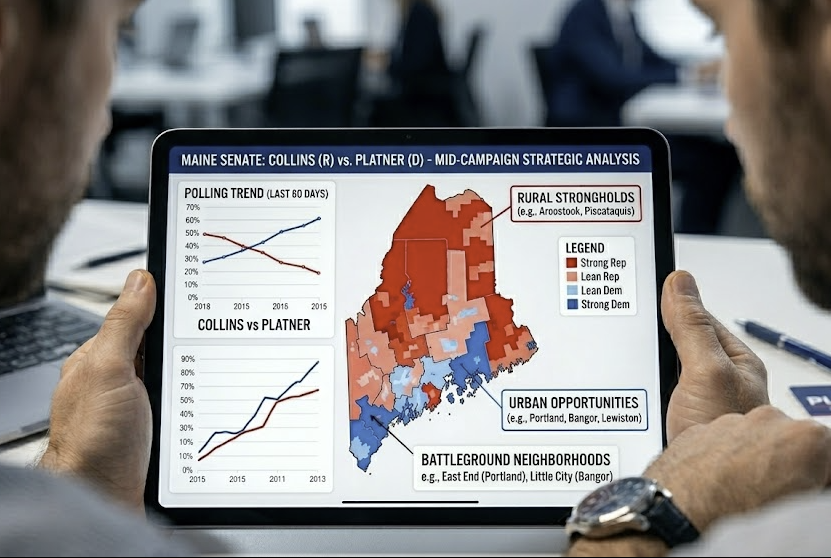
See where the voters are.PharosGraph maps issue intensity and candidate affinity down to the neighborhood. Your team can show a buyer exactly which communities in your coverage area are most engaged on the issues the campaign cares about, and where persuadable voters are concentrated. That geographic precision is something no ratings book can provide.
Spot opportunities before buyers call you.Because PharosGraph updates weekly, your team can track which issues are rising and which races are tightening. That means your sellers can reach out to campaigns proactively with relevant intelligence, not just respond to incoming RFPs. The station that calls first with something useful is the station that sets the agenda.
Help buyers place their ads where they'll hit hardest
Campaigns arrive with their creative already made. They have pollsters and strategists who decided the message. Your sales team isn't going to change their minds about what issue to run on, and shouldn't try.
But campaigns absolutely want help answering a question most stations can't: where in this market does our issue ad have the most impact?
When a buyer brings you an immigration ad, your team can pull up a neighborhood-level map of immigration intensity in the district and show them exactly where that message will land with the most engaged voters. For linear, that informs programming and daypart recommendations. For addressable channels like CTV and streaming, it's even more powerful: you can actually target those specific neighborhoods. The ad doesn't just reach the DMA. It reaches the communities where that issue burns hottest.
That's a capability that turns your addressable inventory from "digital add-on" into the centerpiece of a precision political buy.
No research team required
In most station groups, building a data-backed pitch for a political buyer means submitting a request to a research department and waiting days. Political ad sales moves fast, and that bottleneck kills deals.
PharosGraph is built for sales teams, not research analysts. Your sellers can pull up any race in their market, see the full issue landscape, and build a pitch-ready deck on their own. No tickets. No queue. No waiting for someone in another department to prioritize your request.
A seller takes a call from a campaign buyer in the morning. By lunch, they're sending over a data-backed proposal with neighborhood-level issue maps. That kind of turnaround changes how campaigns think about your station.
This matters even more for smaller teams. An affiliate with two political sellers and no dedicated research staff can walk into a pitch meeting with the same depth of race intelligence that a major-market O&O brings. The playing field is leveled by the tool, not the headcount.
The informed first meeting.A gubernatorial primary is heating up and your sales team wants to get in front of the major campaigns early. Instead of leading with rate cards, your team walks in already knowing the top issues in the race, how voter intensity is distributed across the DMA, and where the competitive dynamics create opportunities. The campaign's media strategist realizes your team has done its homework. That's the start of a partnership, not a transaction.
The competitive win.Three stations in your market are pitching the same PAC for a Senate race buy. Two stations talk about their news audience and adjacency programming. Your team presents a neighborhood-level map showing where the PAC's priority issue concentrates geographically, then shows how your coverage area and addressable footprint align with those hotspots. You've made a data-backed case the other stations can't match.
The proactive upsell.A campaign is already running spots with you. Your weekly PharosGraph data shows a new issue surging in the market, with intensity concentrated in neighborhoods the campaign hasn't targeted yet. You bring this to the buyer before they ask. You're not telling them what ad to make. You're showing them where a new opportunity is forming. If they decide to act on it, you've already done the geographic analysis.
Why this matters more for local TV than you think
There's a narrative in political media that digital is eating broadcast's lunch. It's not entirely wrong, but it misses something important: local TV's advantage has always been geographic. You own a market. Digital platforms can micro-target by individual, but they can't deliver the broad, high-impact reach that moves voter awareness at scale. Local TV can. What it's lacked is the data to prove it.
Voter intelligence changes that equation at every level of geographic scale.
Start with the DMA.
In statewide races like Senate, governor, or presidential, campaigns allocate budget across multiple media markets. In a state like Texas or California with a dozen or more DMAs, they need to decide which markets deserve the biggest share of spend. PharosGraph gives your sales team the data to make that case: which DMAs have the highest concentration of persuadable voters on the campaign's priority issues, and where the race is tightest. That's the difference between getting a standard allocation and winning a disproportionate share of the statewide buy.
Then go to the neighborhood.
Within your DMA, PharosGraph maps issue intensity and voter affinity at the neighborhood level. Your team can show a buyer exactly where their issue resonates most and where persuadable voters are concentrated. That geographic precision turns a broad reach pitch into a targeted impact story.
The result: your sales team can tell a statewide campaign why your market matters and where within your market their dollars will work hardest. No other station in your DMA is having that conversation.
What this means for O&O and affiliate teams
For O&O stations and station groups:
You cover multiple competitive races across your markets. PharosGraph gives your sales leadership a unified view of political opportunity across all your stations: which markets have the hottest races, which issues are driving the most intensity, and where to deploy your political sales specialists. And because O&Os control the national streaming platforms, the intelligence extends beyond linear. The same voter data that shapes a broadcast pitch can drive activation on your streaming and CTV inventory, targeting the specific neighborhoods where a campaign's issue is running hottest. Linear reach plus addressable precision, backed by the same geographic intelligence, is a package no competitor can assemble.
For affiliates:
You know your market better than anyone, but you may not have a dedicated political sales team or a research department generating pitch materials. PharosGraph puts neighborhood-level voter intelligence directly in your sellers' hands. A two-person sales team in a mid-sized market can show up to a pitch meeting with the same depth of race knowledge that a major-market O&O brings. When a campaign buyer sees that kind of preparation from a smaller station, the relationship shifts.
The bottom line
Political ad sales is a relationship business, and relationships are built on credibility. The station whose sales team walks in understanding the races, the issues, and the voter geography earns the buy, the renewal, and the referral to the next campaign.
PharosGraph gives your sales team four things they don't have today:
- Race fluency. Deep, current intelligence on every competitive race in your market. Your sellers show up as informed collaborators, not order takers.
- Geographic precision. Neighborhood-level issue intensity and voter affinity maps that help buyers place their ads where they'll have the most impact.
- Speed. Sellers generate their own pitch materials without waiting on a research team. Morning call, lunchtime proposal.
- A cross-platform story. Linear reach plus addressable targeting, guided by the same voter intelligence. One data set, two ways to buy.
The intelligence to connect issues, neighborhoods, and voter positions exists now. The question is whether your sales team has it.
Contact us to learn more: info@pharosgraph.com


The Suburban Bloc That Could Swing the 2026 Texas Senate Race
What Local TV Ad Sales Teams Are Missing in Political