How Our Model Predicted a Democrat Would Top Georgia's 14th; A Week Before the Vote
Last night, in the deep-red 14th Congressional District of Georgia; the seat Marjorie Taylor Greene held for three terms, Democrat Shawn Harris advanced to the April 7 runoff alongside Trump-endorsed Republican Clayton Fuller. In a jungle primary with 21 candidates, a Democratic candidate finished on top.
The pundits didn't see it coming. Our model did, a full week before Election Day.
The Map That Called It
On March 3, seven days before voters went to the polls, our issue-intelligence model produced this map of Georgia's 14th. Each of the district's 530 census block groups is colored by which candidate leads on issue resonance. Twenty-one candidates were in the field. Only two dominate the map.
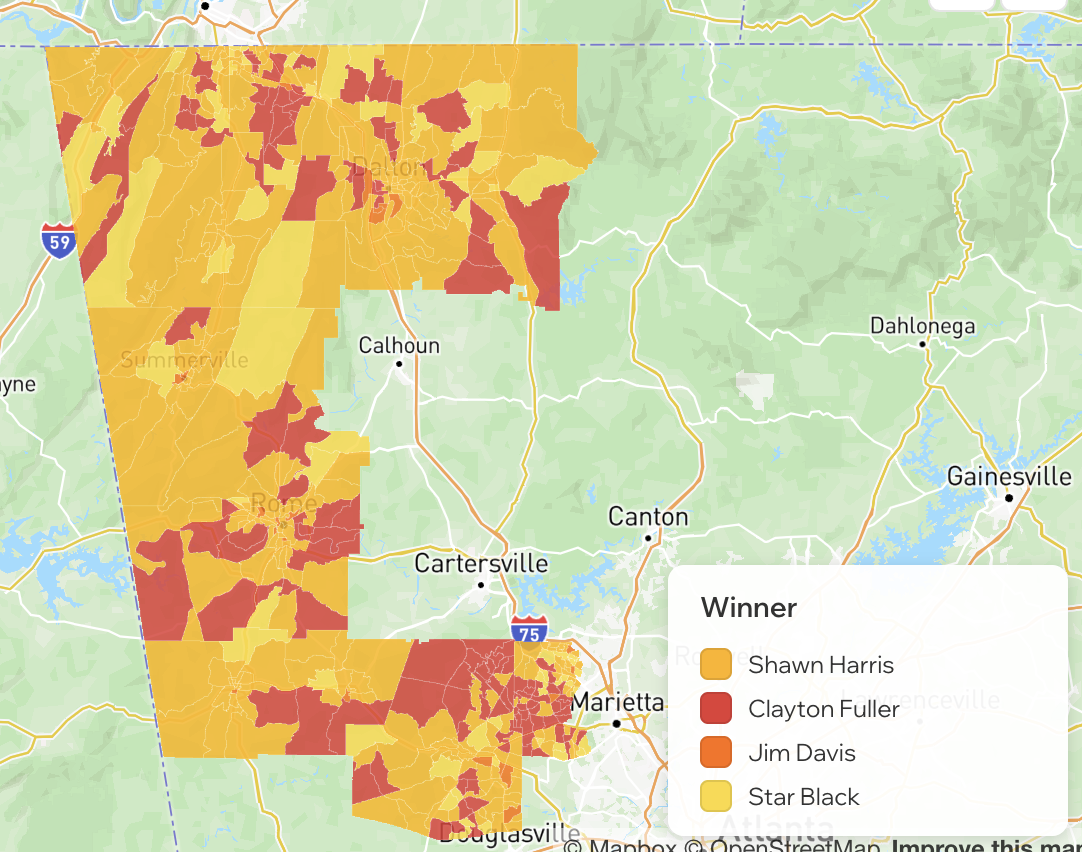
No other candidate won a single block group. In a 21-candidate field, our model identified the exact top two and got the order right.
Why This Matters: Prediction Markets Had It Backwards
At the time our model produced this map, Kalshi predication market had Clayton Fuller at 91% to win the general election, and they’re probably right. Fuller remains a likely winner. But a predication market tells you who wins. It doesn’t tell you by how much or where the contest is happening, or what it would take to change the outcome. Our model puts the district as 60/40 GOP far closer than the market implied.
That’s the distinction. PharosGraph doesn’t predict winners. It maps the terrain beneath the outcome; which voters are persuadable, which issues are doing the work, and how much easier or harder this race is than the headlines suggest.
Our model incorporates prediction market data as one input signal, but issue resonance, moral salience, and community-level demographic alignment told a different story and they overrode the market signal.
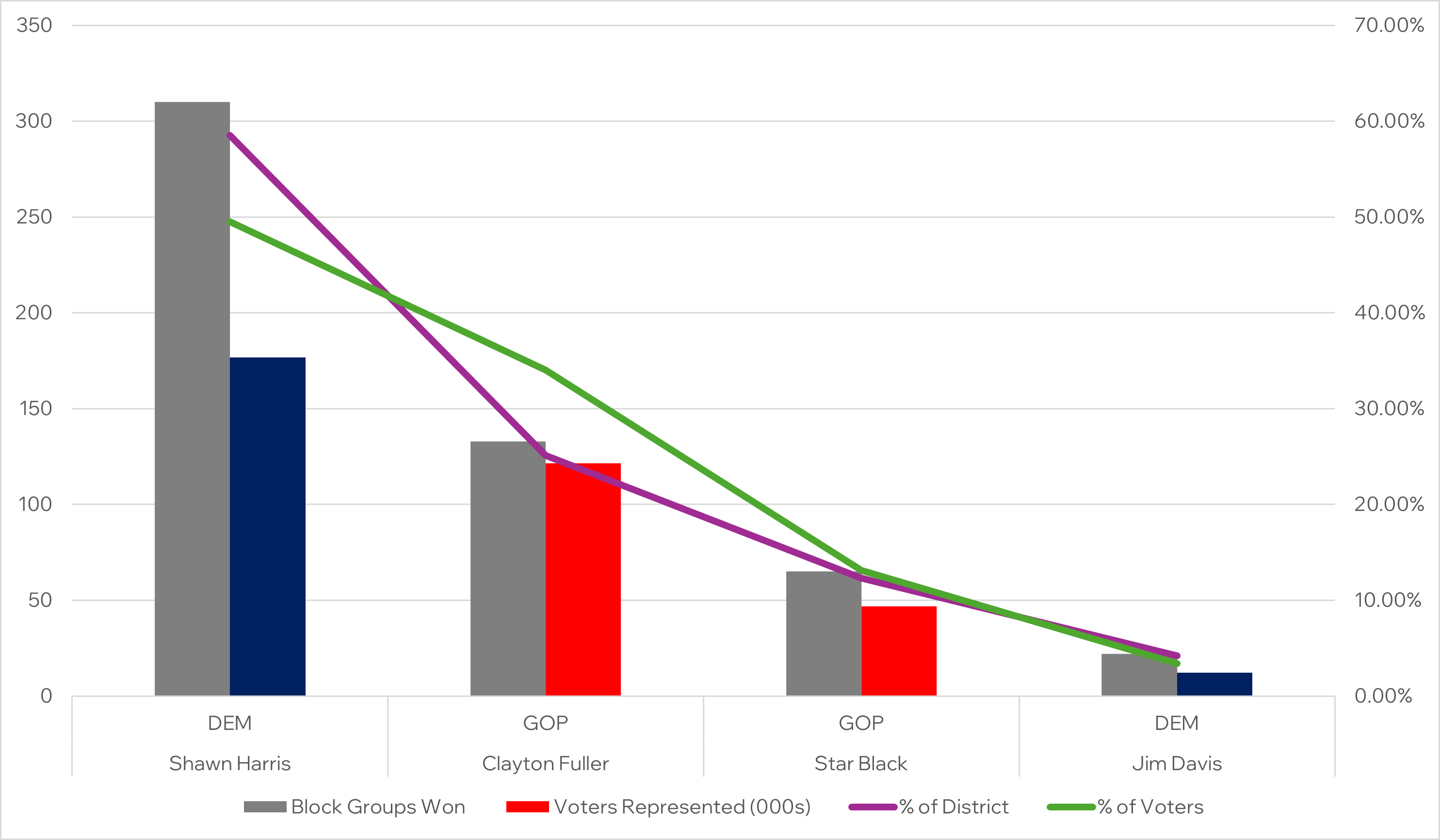
The result: the model didn't just flag that Harris would be competitive. It predicted he would lead the district winning nearly 60% of block groups, representing almost half of the congressional district's population.
What the Model Measures
Our Share-of-Model score is a composite of five signals, computed independently for each of the district's 530 census block groups:
- Sociodemo Resonance: How well a candidate's platform aligns with the demographic and economic reality of each community
- Moral Salience: How strongly a candidate's messaging activates the moral foundations that matter locally
- Visibility: Whether the candidate's message is reaching communities through news coverage
- Issue Framing: Whether issues are framed in ways that resonate positively
- Market Prior: Prediction market probability
Harris scored the highest moral salience of all 21 candidates (0.84), driven by strong activation of care, fairness, and liberty foundations. His platform, comprehensive immigration reform, increased police funding, fentanyl trafficking measures, rural hospital access, renewable energy jobs, didn't read like a typical national Democratic playbook. It read like a candidate who understood this district.
Two Coalitions, One District
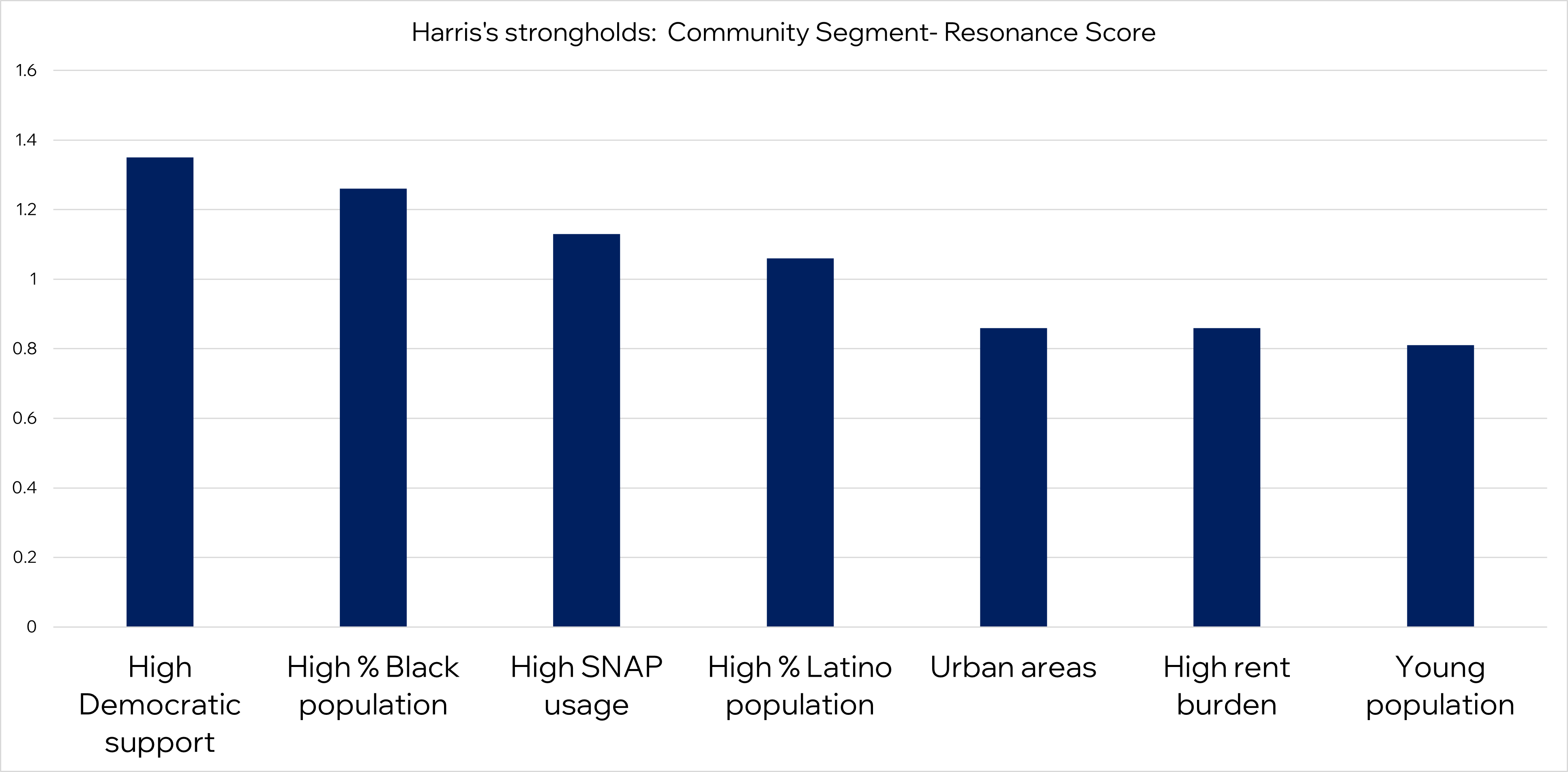
The model doesn't just identify winners, it maps where each candidate's message connects. Harris and Fuller activated entirely different communities:
Harris's strongholds:
Fuller's strongholds:
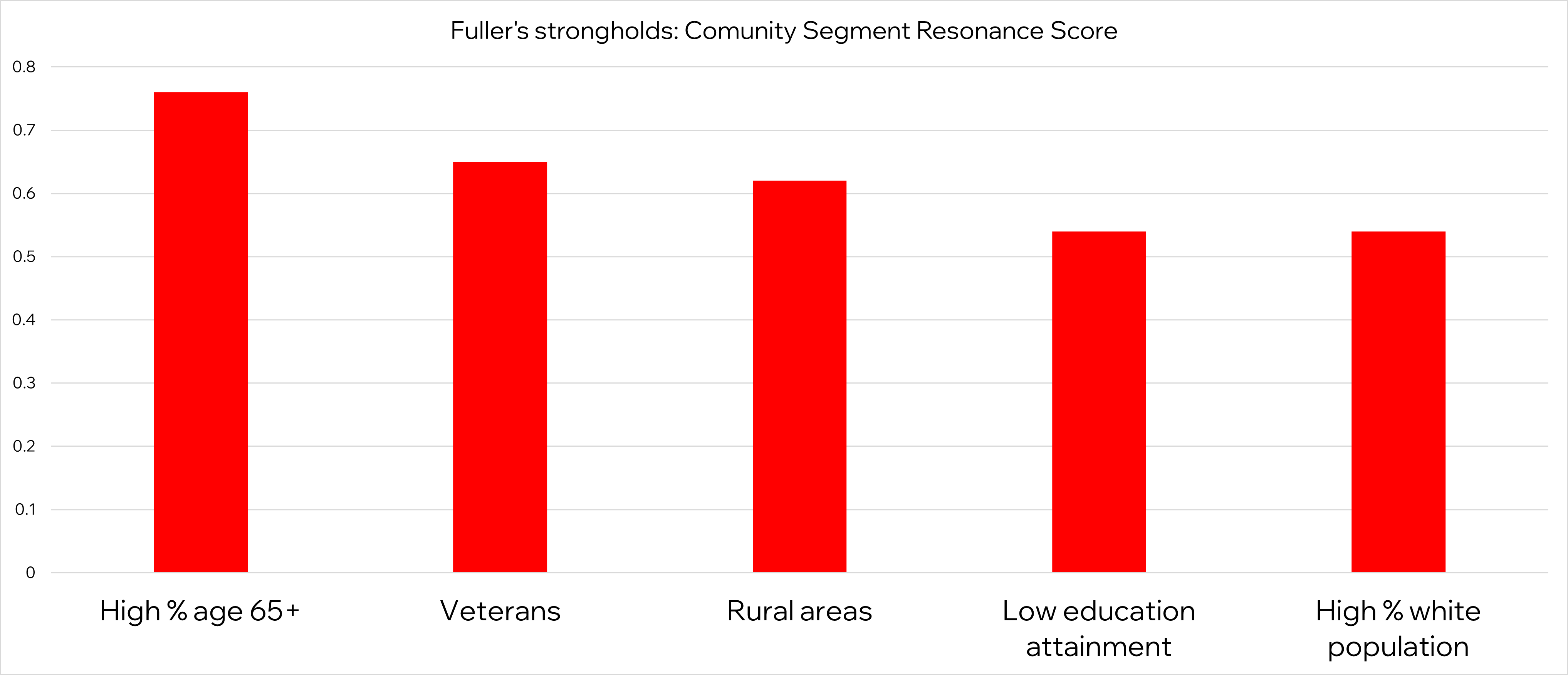
Two candidates. Two entirely different coalitions. The model mapped this structural divide before the votes confirmed it.
The Issues: A Democrat Who Didn't Cede Republican Ground
The top issues in Georgia's 14th are traditionally Republican-coded:
- National Security, Border Security & Immigration (0.95)
- Inflation and Cost of Living (0.92)
- Government Spending & Fiscal Responsibility (0.89)
- Crime, Public Safety & Drug Trafficking (0.87)
- Energy Costs & Domestic Energy Production (0.85)
- Abortion and Reproductive Rights (0.83)
But Harris wasn't ceding that ground. His persuasiveness scores on these core district issues:
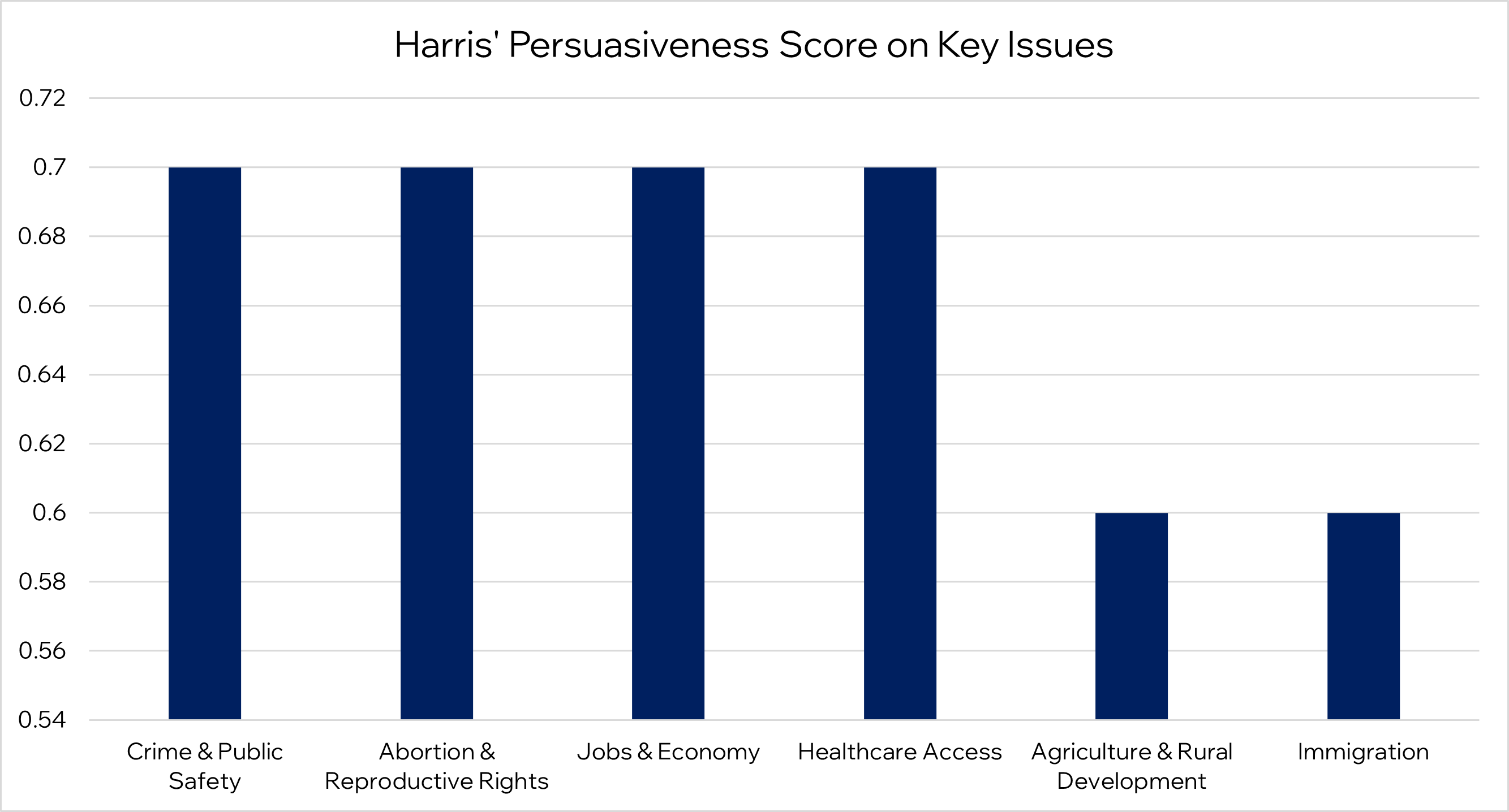
Harris positioned himself as a law-and-order Democrat with credibility on crime, immigration enforcement, and rural economic development, the exact issues this district cares about most. In addition, his framing polarity was positive across every issue, strongest on immigration, inflation, jobs, taxes, healthcare, and agriculture.
The Ideology Gap
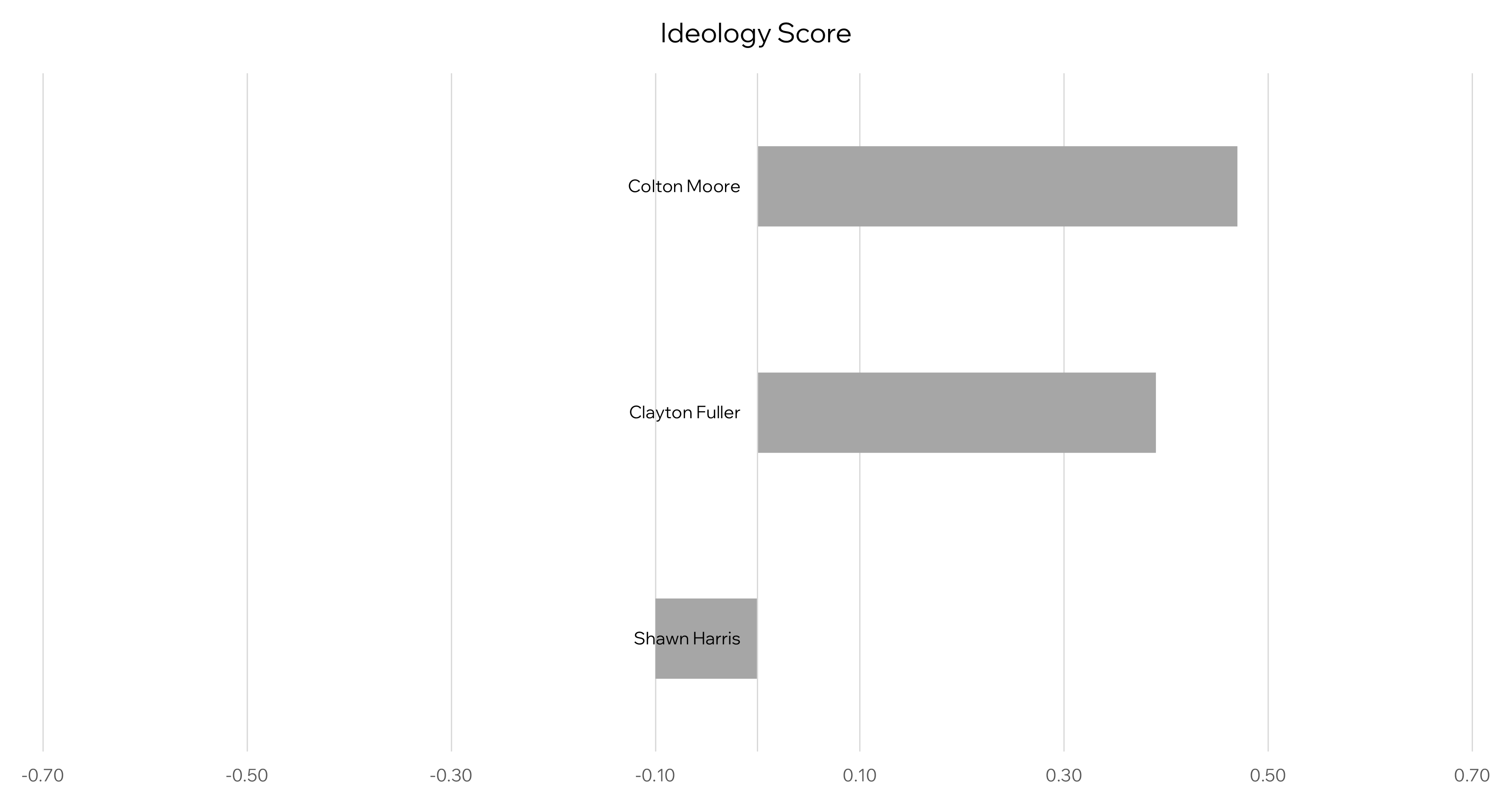
In a district where 15 Republicans split the right-of-center vote, Harris occupied the center-left distinct enough to consolidate Democratic and moderate voters, pragmatic enough to attract crossover support in a jungle primary with no party filter.
What This Means for April 7
Our model didn't predict vote counts. It predicted issue resonance which candidate's message aligned with the real concerns and demographic realities of communities across Georgia's 14th. By that measure, Harris didn't just compete. He dominated, winning nearly three block groups for every one Fuller won.
The April 7 runoff between Harris and Fuller will be the head-to-head test of these two coalitions. Our model will continue tracking how their messages evolve and where they resonate.
One thing is already clear: the assumption that Georgia's 14th was uncontestable for Democrats was wrong. The data said so a week before the voters agreed.
This analysis was produced by the PharosGraph election intelligence pipeline, which computes issue-level resonance scores across 530+ census block groups using news coverage, candidate positioning, moral foundations analysis, sociodemographic alignment, and prediction market data. Explore the interactive map at pharosgraph.com.


The Suburban Bloc That Could Swing the 2026 Texas Senate Race

What Local TV Ad Sales Teams Are Missing in Political